

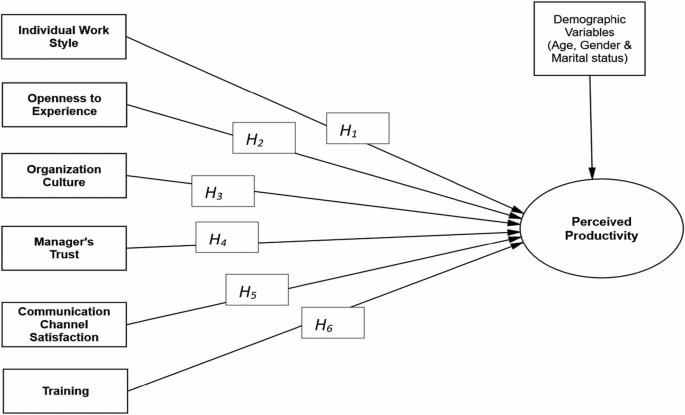
A peer-reviewed paper in Humanities and Social Sciences Communications surveyed 438 remote information technology (IT) professionals in India and asked what actually predicted their productivity. Three things did: how much their managers trusted them, how good the communication channels were, and the team's culture. One thing did not: training. The training effect was not statistically significant.
I spent years helping build and run engineering teams in Bangalore and Krakow alongside the team in Atlanta, so I read this with some recognition. When a remote team is struggling, the instinct in a lot of organizations is to send training: a course on the tooling, a workshop on communication. It is visible, it has a budget line, and it feels like doing something.
What this study suggests, and what I believe, is that the first fix is usually on the manager's side of the relationship. Does the manager trust the team to make decisions without checking in, and does the team know it. Are the channels the team uses actually good, meaning written, searchable, and open to everyone regardless of time zone. Is the culture one where a remote engineer feels like a member or like a vendor.
None of those show up on a training catalog. All of them are things a manager can change this month.
When a remote team you worked with was struggling, what was the first thing that got tried, and what actually helped?
Photo source: https://photos.robertstowe.com/cumberland-island