
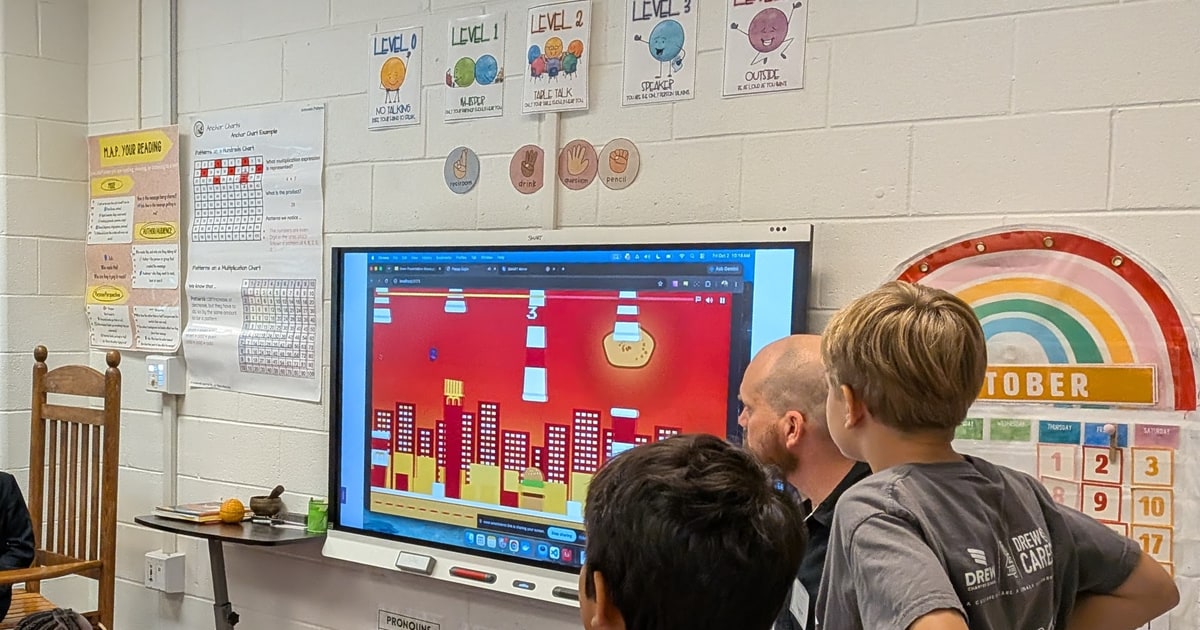
Earlier this month I spent a morning at Drew Charter School in Atlanta for career day, talking with third grade and sixth grade classes about what a software developer does. I have worked with kids and code before, and I knew a talk about my job in financial technology would not hold a room of young minds for long, so I brought a game.
Flappy Eagle
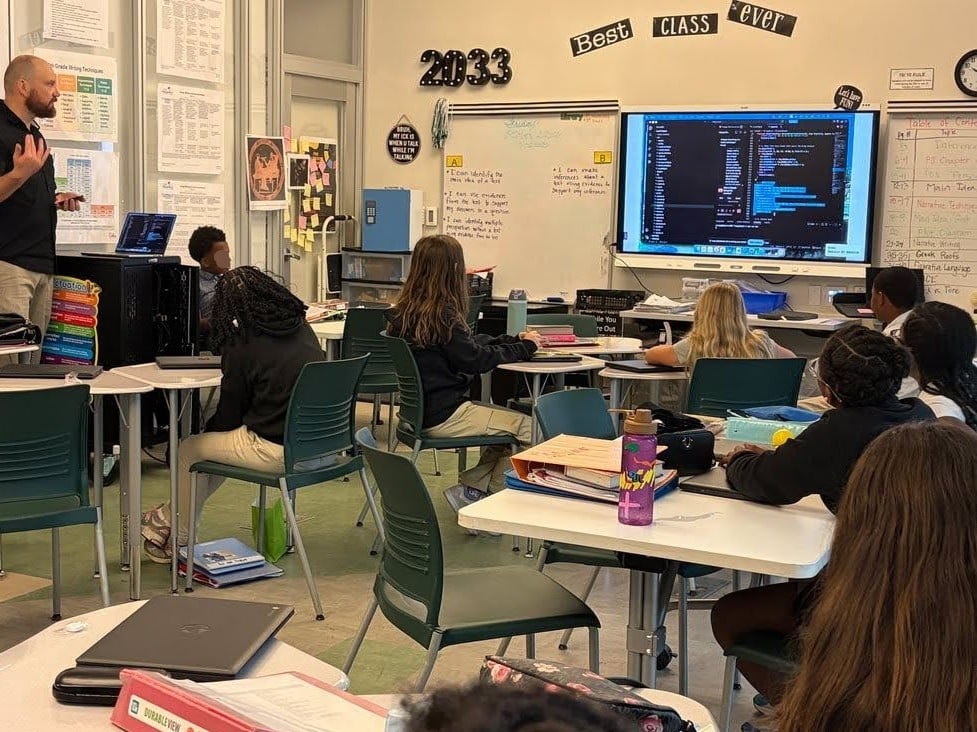
The game was a clone of Flappy Bird running on my laptop, renamed Flappy Eagle for the school's mascot and mirrored to the classroom screen. I walked the classes through how it is put together. One part draws the screen, one part moves the eagle and decides whether it hit something, and one part keeps score, and they stay separate so a change to one does not break the others. Then I showed them where the code lives and how git keeps every version of it, so a bad change is never lost work.
Changing the game while they played it
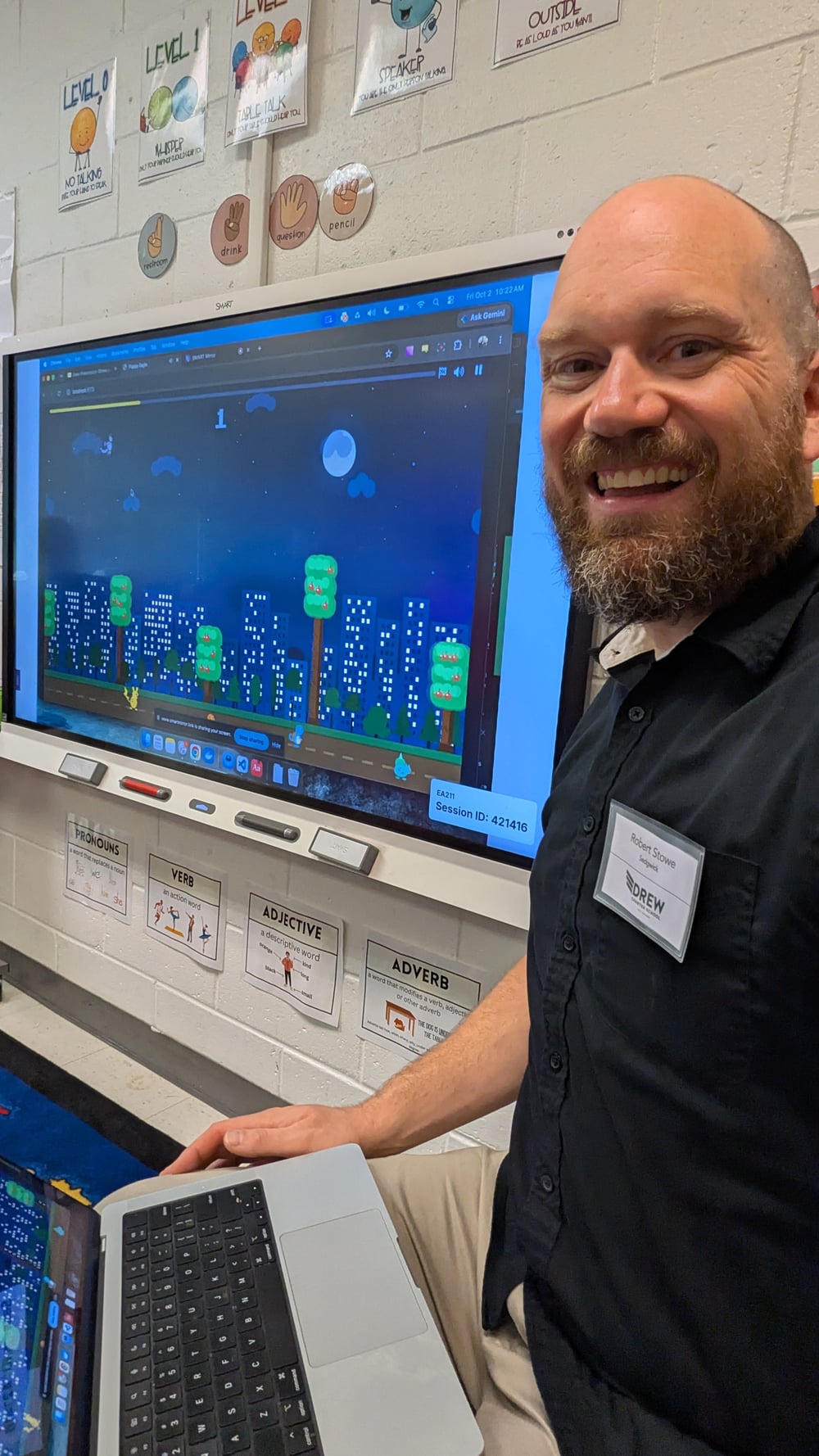
The part I was least sure about was AI, because most of what kids hear about it is either magic or doom, and I wanted them to see the real thing. So I asked each class for ideas to change the theme of the game, handed a controller to the first student, and let Claude Code make the changes while the controller went around the room.
The ideas were better than anything I would have planned. A McDonald's theme. An anime theme. A Spider-Man theme. A pink rainbow unicorn theme. Each one rebuilt the game on the fly, and the theme just changed under whoever was holding the controller at the time. Nobody had to stop playing.
The question everyone asked
Teachers and students asked the same thing in different words. Is this real, and what does it mean for them? I told them what I believe. AI in the development process is growing fast, I use these tools myself, and I do not know exactly what the job will look like when they are old enough to do it, ten or more years from now.
What I could show them is that every idea came from the room, and so did the judgment about whether the new version was any good. The tool did the typing. The people decided what to build and whether it was right.
So I told them where to put their effort. Writing code is cheap now, and it will get cheaper. What does not change is the rest of the work. The skills and structures for managing people and projects, and the principles of software architecture, are the same whether a person or a tool writes the code, and they can focus on learning those. That means breaking a big problem into parts, keeping the parts separate so one can change without breaking the others, deciding what to build first, and working with other people to get it done. A third grader can start on all of that now, and that is what I hope they took home.